
Articles of Interest
The Risk We Don’t Model in Defined Contribution Plans

Creating stronger retirement outcomes through research and good governance of human behaviour
For many Canadians, planning for retirement can feel like preparing to pilot an airplane without ever having taken flying lessons. We have a general idea of how it might work and have observed others doing it, both in real life and in theory. However, we have not yet done it ourselves.
In preparation, we tend to focus on what feels tangible. In a defined contribution plan, that means the accumulation phase. Contributions, investment selection, and market performance take centre stage. It’s like we studied meteorology instead of airplane mechanics.
For years, the conversation around member retirement outcomes in defined contribution plans have been dominated by these same factors: market volatility, inflation, diversification and longevity. We build models, stress test assumptions, track performance and adjust course. These are the risks we understand most clearly.
But inside most pension organizations, risk registers tell a slightly different story.
Understanding the behaviour and motivations of members
Alongside investment and operational risks, there is growing recognition of something harder to quantify. The role of human behaviour. The reality that outcomes are shaped not just by markets, but by the decisions people make within the plan.
In some pension organizations, this is no longer theoretical. It is formally acknowledged and risk management frameworks have begun to recognize that day-to-day decisions, hesitation, misunderstanding, or inaction are part of the risk environment itself, not separate from it. That shift matters.
This is because most members do not experience their pension plan as a system. They experience it as a series of moments.
Joining the plan. Choosing an investment option. Deciding to forgo voluntary contributions. Checking a balance after a market drop. Researching how to turn savings into income.
Each decision feels small but over time, they are anything but. A contribution amount that never changes. A move to cash during volatility. A delay in seeking advice. A withdrawal pattern that feels cautious but slowly erodes long-term income. None of these decisions are unusual. In fact, they are predictable, which is precisely the point.
If patterns of behaviour are predictable, then the risk they create is not random, it is structural. And once something is structural, it becomes a governance concern.
Strategic planning and flexible plan design
Defined contribution plans have always operated with a shared responsibility model. Sponsors design the plan. Members make the decisions. The outcome emerges somewhere in between.
But that balance is beginning to shift, or at least, to be reconsidered.
There is increasing discomfort with the idea that a plan can be considered well governed if the majority of members struggle to navigate it effectively. Offering a wide range of options is no longer seen, on its own, as evidence of a strong plan.
More choice can introduce more risk. Not because the options are flawed, but because the burden of decision-making becomes heavier.
From a fiduciary perspective, the question is no longer just whether the right options exist. It is whether members are realistically positioned to use them well.
That is a different standard and a more difficult one. It requires looking at behaviour not as an external variable, but as something embedded within the plan’s risk profile. It requires asking where decisions are most likely to go wrong, and why.
It also brings the decumulation phase into sharper focus. For years, pension plans have been built around accumulation. Helping members save, helping them invest and encouraging long-term growth. But retirement is where uncertainty becomes real and members of defined contribution plans are asked to make a different set of decisions. Such as how much to withdraw, how long their savings need to last, whether to prioritize flexibility or stability or how to interpret risk when there is no longer time to recover from a major loss.
These are not simple questions. And yet, they are often approached with less structure than the accumulation phase that precedes them.
Similar goals, but different outcomes?
Research in Canada, including studies from the Financial Consumer Agency of Canada, have shown that the average person has a modest level of financial literacy and confidence when making major decisions about their savings and pensions.
At the same time, retirement aspirations are remarkably consistent across ages groups, income levels and gender. Canadians want to spend ample time with family and loved ones in retirement, in places they love, supported by income that lasts and can adapt to future care and medical needs. Many Canadians also hope to leave some money behind, either to benefit their family members and/or to support causes they are passionate about.
The goals are clear, but the path to achieving them is not and the ability of Canadians to map out how they will achieve their goals varies significantly.
Even so, patterns in behaviour are hard to ignore. Plan members with very different needs and circumstances often make similar decisions, sometimes at odds with what may serve them best over the long term.
Some withdraw too cautiously, others commit too early to lifetime income. Some delay decisions to keep their options open, while others disengage based on expectations about how long they will live. This is not irrational. It is human and it highlights a gap.
Rethinking behavioural risk responsibility
If a plan is designed to support members through retirement, but the most critical decisions are left largely unsupported, then behavioural risk is not being managed. It is being absorbed.
This is where governance begins to evolve. In some organizations, risk management practices are already pushing in this direction. Not by eliminating choice, but by recognizing that how decisions are structured, timed, and supported has a direct impact on outcomes. There is a growing emphasis on identifying where in the member journey risk is concentrated. On understanding when disengagement is most likely. On aligning communication and tools to those moments, rather than distributing them evenly over time.
There is also a clearer understanding of the limits of education. Financial literacy matters, but it does not override behavioural tendencies. Even informed members may delay decisions. Even experienced investors may react to market movements. Knowledge helps, but it does not eliminate risk.
What appears to make a greater difference is a combination of structure and support. Clear pathways. Thoughtful defaults. Guidance that appears when decisions are being made, not months or years before (or worse, after!). These are not dramatic changes, but they are meaningful ones. They reflect a shift away from the assumption that members will optimize their own outcomes if given enough information and toward the recognition that plan design and governance play a more active role in shaping those outcomes than previously acknowledged.
This does not change the nature of defined contribution plans. Members will always make decisions and outcomes will always vary. But it does change how success is defined. A plan is no longer judged solely by the quality of its options or the efficiency of its administration. It is judged, increasingly, by whether those elements translate into reasonable outcomes for the people using it.
Risk in defined contribution plans does not begin and end with markets and returns. It lives in the decisions members make every day.
Recognizing that is not just a shift in perspective. It is a shift in responsibility.
Tyler Hopson
Director of Marketing, Communications & Brand, Plannera
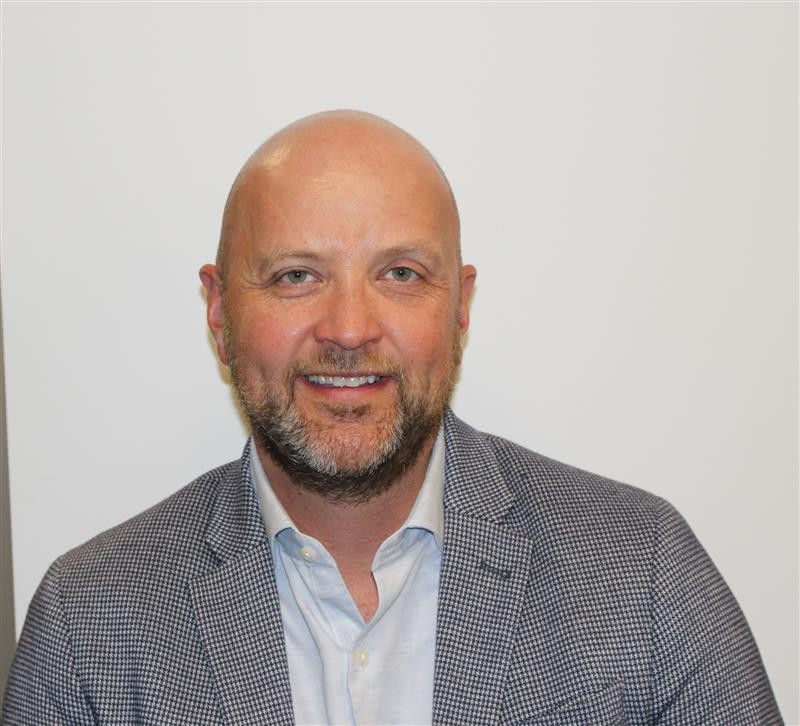
Tyler Hopson is the Director of Marketing, Communications & Brand at Plannera, responsible for corporate relations, member education initiatives, marketing and communications. Tyler has spent two decades working in communications, stakeholder engagement and government relations at all levels of government, as well as in media relations and journalism. He previously worked for a multinational company in the mining sector with oversight for Indigenous Engagement across Canadian operations, helping to increase procurement from Indigenous-owned businesses by hundreds of millions of dollars over a seven-year timeframe. Tyler holds a Master of Journalism degree from the University of British Columbia and a Bachelor of Arts degree from the University of Regina, as well as a Certificate in P2 from the International Association of Public Participation (IAP2).