
Articles of Interest
Measuring the wrong things right: Rethinking climate metrics for a systemic risk reality

Climate change may have slipped from the front pages, but it has not disappeared as a key risk for Canadian pension plans. For long-term investors, worsening physical impacts alongside a disorderly transition remain core drivers of investment risk. In response, many investors have built a familiar set of climate practices that provide real value—but are no longer sufficient on their own.
The task for pension funds now is to build on these foundations with a broader set of data points and tools to address climate change for the risk it is – a systemic risk that touches all corners of pension fund portfolios, the economies on which investment returns depend and the systems that their pension beneficiaries depend on.
Three common assumptions that need updating
Against this backdrop, we often hear three underlying assumptions in pension climate conversations. Each contains an element of truth but taken at face value they can point boards toward overly simple answers to complex risks. They narrow attention to what is most measurable, encourage a focus on portfolio optics rather than real-economy risk, and can give boards a false sense of reassurance when certain metrics move in the right direction. In a world where climate change is a systemic, compounding risk, those sources of comfort can translate into blind spots—leaving funds under-prepared for the very disruptions they are trying to manage.
Assumption 1: “We can only do so much until the data improves”
A common refrain from pension investors is that climate data is not good enough to support robust decision-making. Companies do not consistently disclose emissions, scope 3 coverage remains patchy, and private markets are more opaque than listed markets. Methodologies differ, approaches to estimation are poorly understood and the outputs feel too model-driven for boards that are rightly wary of false precision. These challenges are real and they do create friction.
However, they do not change the underlying nature of the risk. Climate change is now widely characterized as a foreseeable, systemic financial risk—one that affects entire economies, sectors and asset classes, not just individual issuers. From a fiduciary perspective, the standard is not perfect data but reasonable, good-faith judgment in the context of uncertainty. That means pension fiduciaries cannot simply wait until scope 3 coverage is complete, or every private asset is benchmarked. We already know enough to identify transition-critical sectors (such as power, heavy industry, transport and buildings) and enabling technologies (like renewables, grids, storage, and energy efficiency).
Seen this way, “data gaps” become a constraint to be managed, not a reason to delay. Boards should prioritize the most decision-useful data, focus on concentrations of risk and opportunity, and be explicit about uncertainties. They can also lean on collaborative initiatives and industry guidance to avoid reinventing the wheel. The goal is not perfect measurement, but measurement that is good enough to inform decisions about strategy, risk appetite, capital allocation and stewardship priorities.
Assumption 2: Our portfolio carbon footprints tell us what we need to know
Portfolio carbon footprints have become the default climate metric in many institutional investor climate strategies. Used well, they do have real value. Footprints help identify where emissions are concentrated in the portfolio, establish a baseline, and set a clear direction of travel. Using carbon footprints to set portfolio decarbonization targets allow investors to signal support for global efforts to reach net-zero emissions by 2050 and to align with emerging disclosure expectations.
Yet carbon footprints also have important limitations that boards need to understand. They are backward-looking snapshots based on historical emissions, not forward-looking assessments of transition preparedness. They are sensitive to methodology choices—what is included, what is estimated, and how scopes are treated. They are also resource-intensive to calculate, update and interpret; their utility should be assessed in light of that effort, especially for smaller plans. Crucially, portfolio footprints can be “managed” by titling away from certain sectors or excluding parts of the portfolio without materially affecting real-world emissions. On their own, they provide little insight into whether the real economy is decarbonizing, whether companies have credible transition plans, or how vulnerable the portfolio is to abrupt policy changes.
Assumption 3: Reducing portfolio emissions is how we manage climate risk
A third common assumption is to equate reducing portfolio emissions with managing climate risk. Many funds understandably focus on decarbonizing their portfolios, but focusing on portfolio emissions alone is an insufficient climate risk-management strategy. A de-carbonized portfolio in a high-carbon world is still exposed to systemic risk. If the broader economy fails to transition in an orderly way, pension assets can be hit by weaker growth, higher inflation, physical damage, stranded assets and policy shocks.
Effective management of climate change as a systemic risk therefore also requires efforts to drive real economy decarbonization: using stewardship to press for credible transition plans and capital allocation shifts among systemically important companies, supporting policy and regulatory frameworks that create clear incentives to cut emissions, and allocating capital to climate solutions that enable the transition. These activities will look different for each pension fund depending on its size and governance, but together they move climate strategy beyond optics toward real risk management.
From single metrics to right-sized climate dashboards
If these assumptions are incomplete, what comes next? One practical answer is to move from relying on a single flagship metric to developing a climate risk dashboard that is tailored to each fund’s governance structure, investment strategy and capacity. The aim is not to overwhelm boards with data, but to give them a concise, forward-looking view of how climate risk and opportunity are evolving across the portfolio and the wider system.
For large funds with in-house teams, these dashboards can be sophisticated and near-real-time. For smaller plans with limited staff, the same concept can be implemented in a lighter way: a smaller set of indicators updated annually, drawing heavily on external research and manager reporting. What matters most is clarity of purpose—choosing metrics that genuinely inform decisions about asset mix, manager selection, engagement priorities and risk appetite—rather than the number of charts.
Climate metrics, risk management and fiduciary duty
Ultimately, climate metrics matter not as an accounting exercise but as an input into sound risk-management. When done well, a climate dashboard does more than report data; it shows whether risk and opportunity exposures are changing over time and whether the fund’s actions are strengthening its resilience to climate-related shocks and moving the needle in terms of the global goal of net zero by 2050.
For boards and investment committees, that makes climate metrics both a challenge and an opportunity: A challenge because familiar approaches are no longer sufficient on their own, and an opportunity because the right data and tools can improve overall risk management and better align the fund with its fiduciary duties.
Shannon Rohan
Chief Strategy Officer, SHARE
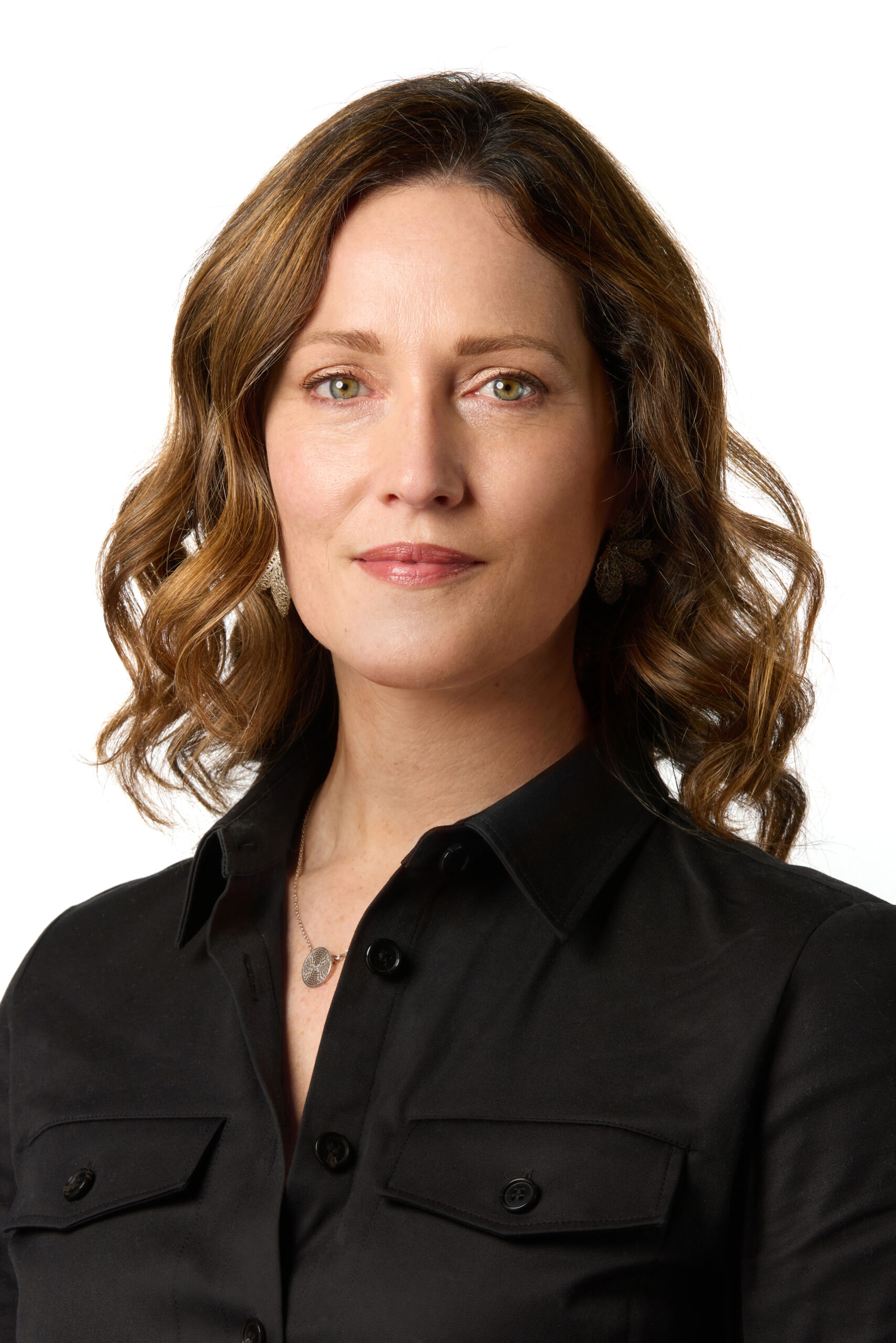
Shannon is a senior leader in responsible investment with more than 20 years of experience helping institutional investors develop and implement customized, practical, and results-focused responsible investment strategies. At SHARE, she leads strategic advisory work that strengthens investor capacity to integrate sustainability into investment governance and decision making. She acts as an Outsourced Responsible Investment Officer to several maple middle pension plans and is a voluntary board member and treasurer of the First Peoples’ Cultural Foundation.