
Articles of Interest
Governing the Pension Promise
What Canada’s pension trustees told us about risk governance and board effectiveness
Canada's pension system holds over $2.5 trillion in registered pension funds, capital entrusted to support the financial futures of millions of Canadians while also playing a vital role in the broader economy.
But behind these assets, often discussed in terms of returns and funding ratios, sits something more fundamental: governance. Millions of Canadians depend on these pensions in retirement, and the research is clear on why that matters: a well-governed pension plan is simply the most efficient way to deliver retirement income. According to HOOPP's The Value of a Good Pension, a Canada-model pension plan turns each saved dollar into far more retirement security than saving on your own: $5.32 in retirement value for every dollar contributed, compared to just $1.70 through a typical individual approach. That efficiency is the direct result of strong governance, rigorous risk management, and a singular focus on members, turning financial assets into trusted, reliable income and genuine peace of mind in retirement.
Pension trustees are responsible for stewarding pension assets in accordance with a clear legal standard of care: to act prudently, in the best interests of plan members, and with the care, diligence, and skill that a reasonable person would exercise in similar circumstances. At its heart, this is a responsibility of risk governance. It is about ensuring that the decisions made today protect the long-term sustainability of the plan and the financial security of members for generations to come. And yet, despite the importance of this role, we rarely pause to ask: how are trustees themselves experiencing it?
The ACPM launched a national survey at the end of November 2025, to better understand governance through the lived experience of trustees, not as a compliance exercise, but as a tool for reflection and continuous improvement. Ninety-five responses were received over the three-week survey period, representing a broad cross-section of plans, jurisdictions, and governance models. The results offer a rare glimpse into how pension boards in Canada are functioning today.
The weight of the work
Pension trustees are entrusted with complex, often consequential decisions that will shape lives and the economy for decades to come, including generations yet to retire. They understand the significance of that duty. As one trustee reflected, “You don’t always realize the weight of the role until you’re in the room.”
The survey also showed that boards are relatively lean, with 72% composed of just 6 to 10 members. Nearly 45% of trustees who responded serve in a volunteer capacity, contributing valuable time and expertise to pension governance.
How trustees see their own governance
The average board effectiveness score was 8.6 out of 10, with 56% of trustees rating their board at the highest levels of effectiveness. Trustees feel engaged, informed, and purposeful in their roles. And yet the same survey that produced these confident scores also points to areas where trustees themselves see opportunity.
Where trustees see opportunity
Alongside these strengths, the survey identifies two key areas where trustees themselves see opportunity.
The first is onboarding. Only 61% of trustees believe their board is effective at onboarding new members, representing one of the lowest-rated areas in the survey. Trustees in their first three years report steeper learning curves and lower confidence in areas that sit at the very heart of pension governance: investment literacy, interpreting actuarial results, and understanding fiduciary duties. What's notable is that newer trustees are also the most likely to rate onboarding as "effective". This may reflect that current practices are effective at making people feel welcomed and supported at the table. The opportunity is to build on that foundation, so that new trustees can move more quickly from feeling comfortable to feeling confident in the substance of their role. As one trustee described it: "A steep learning curve in a high-stakes environment."
Role clarity is another area where trustees see room to grow. Trustees pointed to uncertainty around where decision-making authority sits: between the board and management, between the plan sponsor and plan administrator, and across committee structures. Several comments, unprompted, spoke to the challenge of operating at the right altitude. This may be less about capability and more about blurred lines of accountability. In complex governance structures, that ambiguity can introduce real governance and decision-making risk. The lack of role clarity surfaced across multiple questions in the written comments, suggesting it is an area where boards may wish to spend more intentional time.
Culture as a governance foundation
If there is one consistent theme in the survey results, it is culture. Trustees most frequently identified a positive and collaborative culture (64%) and knowledge and competence (59%) as their board's top strengths. This is a signal of something genuinely working well across the system.
The survey also offers a small but telling reflection on the value of diverse perspectives at the table. Women trustees identified the same top two strengths as the broader group. Where they differed was in their third priority. Women placed greater emphasis on commitment to action and follow-through, rather than the quality of discussions. Women also expressed somewhat lower confidence that boards consistently encourage open, balanced debate when perspectives differ — a reminder of the unique contributions that different lived experiences bring to the boardroom, and why creating space for them matters.
Inclusive governance isn't about agreement. It is about intentionally creating space for those different perspectives and exploring them with curiosity. As one trustee captured it: "Effective challenge from all trustees makes a real difference." And boards that do this well are better positioned to make decisions with confidence, no matter what the environment throws at them.
Trustees were clear about how culture is built: time together, relationships, shared learning, and strong leadership from the board chair. Notably, trustees frequently linked board effectiveness back to relationships, not just governance structures or formal processes. In my own experience on boards, some of the most meaningful moments happen outside the formal agenda, over a shared meal, a walk between sessions, or an event attended together. The more we get to know each other as people, the safer and more confident we feel expressing different perspectives, and the better we function when it matters most. As one trustee put it: "More team building and relationship events would strengthen our board." Culture is not a soft element of governance. It is the foundation on which everything else is built.
A more complex risk landscape
Trustees were also candid about where the world is changing and where they want to build greater confidence. Cyber, AI, and information security topped the list of learning priorities at 64%, followed by risk management and scenario planning at 44%. These results make sense in context: pension plans hold highly sensitive personal data and steward significant assets. And, the risk landscape in these areas is evolving quickly. Only 61% of trustees feel confident in protocols for managing reputational or cyber events, and just 32% report that their board has tested a cyber-incident response plan in the past year. Trustees know this, and they are telling us where they want support. That kind of self-awareness is itself a governance strength.
Governance capacity
Trustees told us clearly that the scope, pace, and technical complexity of what lands on their agendas has expanded. Boards are carrying a heavier governance load, often with the same time, tools, and support structures as before. And yet, in that same environment, 80% of boards report having a formal risk management framework in place, with another 14% developing one. Even under pressure, boards are strengthening their governance structures. That is worth acknowledging.
The opportunity is not to "fix" pension boards but to support, enable, and complement them with specific expertise, as needed. When asked what would most strengthen board effectiveness, trustees pointed to two clear themes: independent board members or chairs, and specialized expertise.
Independent trustees rated boards as more effective. They reported stronger fiduciary focus, greater confidence managing conflicts of interest, and more effective engagement with management. While the data does not establish causation, it does invite reflection on whether independent perspective plays a role in strengthening board confidence and effectiveness, and whether greater capacity might sometimes be achieved not by adding a trustee, but by engaging a strategic advisor.
Pension boards report strong representation in finance, senior executive experience, governance, and investment expertise. Areas that appeared less frequently include actuarial, legal, and risk management. This may be a useful data point as boards reflect on their skills matrix and succession planning.
And succession planning itself is a pressure point. Trustee turnover and succession gaps surfaced repeatedly in the written comments, unprompted. As one trustee noted: "Succession planning and trustee turnover are persistent challenges."
In conclusion
Pension governance sits at the intersection of a legal promise, a financial system, and a long-term horizon. It requires judgement, discipline, and discernment applied consistently over time.
What this survey makes clear is that Canada's pension trustees are self-aware, committed, and clear-eyed about where they want to grow. The survey results point to opportunities around onboarding, role clarity, continuing to invest in relationships and culture, and where it makes sense, external expertise and perspective to complement what boards already do well.
Equally important is what the act of listening itself represents. Governance is often evaluated through structures and outcomes. But trustees experience how it functions in practice. Gathering and acting on their perspectives is not just a research exercise. It is a governance tool in its own right, one that enables the reflection and continuous improvement that strong boards depend on.
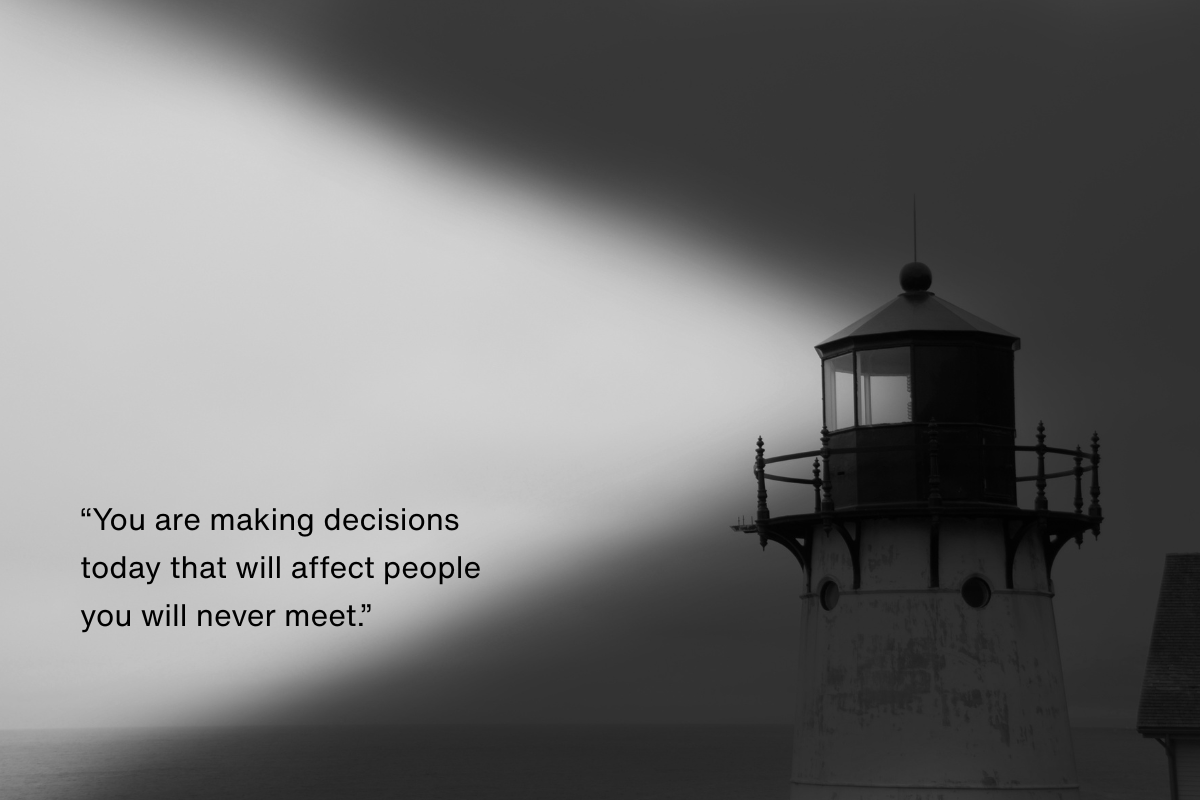
As one trustee reflected: "You are making decisions today that will affect people you will never meet." That sense of responsibility, and the commitment it reflects, is the foundation on which strong governance is built.
Caroline Blouin, Founder, Blue Sun Partners
.jpg)
Caroline Blouin is the Founder of Blue Sun Partners, a boutique advisory firm working at the intersection of strategy, governance, and execution. Caroline brings over 30 years of expertise across pensions, insurance, investments, and regulatory affairs — shaped by experience from every seat at the table: as a global consultant advising multinationals on pension and benefit strategy including complex cross-border mergers and acquisitions, a plan sponsor running programs at scale, an insurer executing pension risk transfer transactions, a regulator who stood up and modernized the largest pension regulator in Canada, and a board director. Caroline currently serves on the boards of Plannera, Canadian Scholarship Trust, FCT, Normandin Beaudry, and the Canadian Institute of Actuaries. She is a Fellow of the Canadian Institute of Actuaries and a Chartered Director.
The survey was designed, administered, and analyzed by Stephanie Speal, Speal Consulting Services, whose rigorous work made this research possible. Thank you, Stephanie, for your collaboration and incredible insights.