
Articles of Interest
Dynamic pension funds: A new era for decumulation

Retirement planning has long faced a key challenge: how can savings be converted into a predictable, sustainable income that adapts to the needs of retirees? Traditional decumulation options, such as self-managed withdrawals from registered retirement income funds (RRIFs) or life income funds (LIFs) and individual annuities, have their drawbacks, including administrative complexity, the risk of error or outliving savings, and uncertainty about retirement income.
To address these concerns, Quebec recently introduced dynamic pension funds, also known as variable payment life annuities (VPLAs). This innovative solution expands the range of decumulation options and will transform the financial approach to retirement. Anyone who has accumulated retirement savings in a registered plan (such as an RRSP, RRIF, LIF or pension plan) will be able to benefit from this new option of transferring part of these savings into a dynamic pension fund offered by a voluntary retirement savings plan (VRSP), thereby converting their savings into lifetime income.
As this model is set to expand across Canada, dynamic pension funds represent a major step forward, placing defined contribution (DC) and defined benefit (DB) plans on equal footing in terms of income predictability.
How do dynamic pension funds work?
Dynamic pension funds allow members of a DC plan or VRSP to transfer a portion of their savings into the fund. This amount is then converted into lifetime income, based on predetermined conversion factors. Transferred savings cannot be withdrawn from the fund and are used exclusively to pay a lifetime pension.
The amount of the pension is adjusted annually based on the fund’s return relative to a predetermined reference rate (e.g. 4%). This allows members to keep benefiting from the investment risk premium offered by financial markets. The pension is also adjusted at least once every three years to reflect the group’s mortality experience. Each adjustment may be upward or downward, which is what enables the fund to offer sustainable income for life.
With the introduction of dynamic pension funds, everyone can join, when the time is right for them, a pension plan that pays a lifetime income.
Simplified retirement planning
No withdrawal or investment decisions are required with dynamic pension funds, which removes much of the uncertainty, reduces the risk of error in managing savings and simplifies retirement planning. No more guessing what to do with one’s savings—a common challenge with the traditional approach of drawing down a RRIF or LIF, where the fear of running out of money can lead to living more modestly than necessary.
Fixed conversion factors also help simplify retirement planning and are a key feature that set dynamic pensions apart from individual pensions, whose prices fluctuate with market conditions. Each person knows the initial amount of the dynamic pension that will be paid out in advance.
The predictability in the cost of purchasing such a pension is a game changer that makes it easier to convert the value of savings into retirement income, which should also incentivize people to save.
Sharing risk to optimize retirement income
A dynamic pension fund allows for risk pooling: with this option, you’re not on your own!
Risk pooling enables the fund to maintain a more growth-oriented investment allocation, even at advanced ages (such as after 70), thereby helping to offer a retirement income superior to that obtained when risks are managed on an individual basis. Pooling also provides access to fees that are generally lower than those associated with individual savings.
A dynamic pension fund enables more savings to be used each year with the assurance of always having retirement income—equivalent to a RRIF with a licence to spend.
Using the available decumulation tools
Dynamic pension funds should not be viewed as a one-size-fits-all solution for all savings but rather as one tool that can be integrated into a decumulation strategy. For example:
- The stable lifetime income offered by dynamic pensions can be used to cover known, recurring expenses, such as housing and food.
- Dynamic pensions can be combined with tools that offer greater flexibility, such as RRIFs, LIFs or TFSAs, to fund one-off projects or unexpected expenses.
Combining a dynamic pension with deferred government pensions for greater financial security
A successful decumulation strategy also relies on effectively coordinating income from public plans. The amounts received annually from these plans can be significantly increased by deferring the start date of benefits. Québec Pension Plan (QPP) payments can be deferred until age 72, whereas Canada Pension Plan (CPP) and Old Age Security (OAS) benefits can be deferred up to age 70.
Deferring these sources of stable, indexed lifetime income can be the key to financial security in retirement. Savings can then be used earlier to meet financial needs before government pensions begin and to supplement guaranteed lifetime income through the purchase of a dynamic pension or an individual annuity.
Creating a Quebec model
Quebec’s regulatory framework for dynamic pension funds is comprehensive while remaining simple and flexible, particularly with respect to the number of funds, the reference rate, and the death benefits to offer. A streamlined design may be a wise choice—for example, offering a single fund with one reference rate that will not change over time. The main decision for an individual then becomes whether to transfer a portion of their savings into the fund to receive lifetime income.
Financial institutions are more likely to integrate a dynamic pension fund into their VRSP rather than sponsors are of adding one to their DC plan. A government or independent body that already manages large public-sector pension plans could also take on the investment management, administration, and oversight of such a fund. These funds could emerge at the provincial level and become robust vehicles to funnel significant sums intended for decumulation.
Quebec paved the way by publishing its regulatory framework while working closely with the Canadian Association of Pension Supervisory Authorities (CAPSA), and the rest of Canada will soon follow. The regulations that will emerge across the country will inevitably include some local nuances. Although uniformity may have its advantages, what matters most is that we now have a national consensus aligned around a common goal: helping people across the country manage the decumulation of their retirement savings.
Modernizing decumulation
The introduction of a new option for decumulating savings is a significant step forward that has come at the right time, when more than 13 million people in Canada are over age 55 and the population over age 75 is expected to double in the next twenty years.
Dynamic pension funds are a modern solution to the challenges of decumulation, but they are not a silver bullet. Rigorous design, transparency around benefit adjustments, clear communications, and strong governance are essential to maintaining confidence. These challenges are, however, manageable—and far less daunting than those individuals face when they must make their retirement income decisions on their own.
These funds will help redefine financial security in retirement and encourage retirement saving. As a result, DC plans, and savings plans by extension, will become more effective, serving not only as accumulation vehicles but also as engines for funding predictable, sustainable and higher retirement income.
From Canada to Australia: An overview of the experience with dynamic pension funds
Two main dynamic pension funds currently exist in Canada: the one offered by the University of British Columbia Faculty Pension Plan, in place since 1967, and the more recently established fund of the Public Employees’ Pension Plan (PEPP) in Saskatchewan. Internationally, the Australian Retirement Trust (ART) offers a similar solution. At PEPP and ART, the dynamic pension is referred to as “Lifetime Pension”, akin to a longevity pension.
These examples have shown that collective approaches to decumulation can deliver stable and attractive income while maintaining a degree of flexibility. Several key insights emerge from their experience:
- Communication is a key success factor. Personal support is often needed, particularly as concerns tend to centre on volatility or the possibility of losing capital upon death. Targeted education, clear explanations, and practical tools—webinars, workshops, and calculators—help improve understanding and confidence. With clear communication, very few members require additional explanations, even in years of unfavourable returns.
- Participation increases gradually. Uptake at launch may be modest due to limited familiarity and the absence of an investment performance track record. Interest grows as members better understand the value of lifetime income, risk pooling, and flexible death benefit options. Plan sponsors should therefore anticipate a gradual rollout and invest early in sustained communication.
- A design based on simple and transparent principles supports performance. Avoiding unnecessary complexity, such as return-smoothing mechanisms, contributes to clarity and sustainable administration.
Louis-Bernard Désilets FSA, FCIA
Partner, Normandin Beaudry
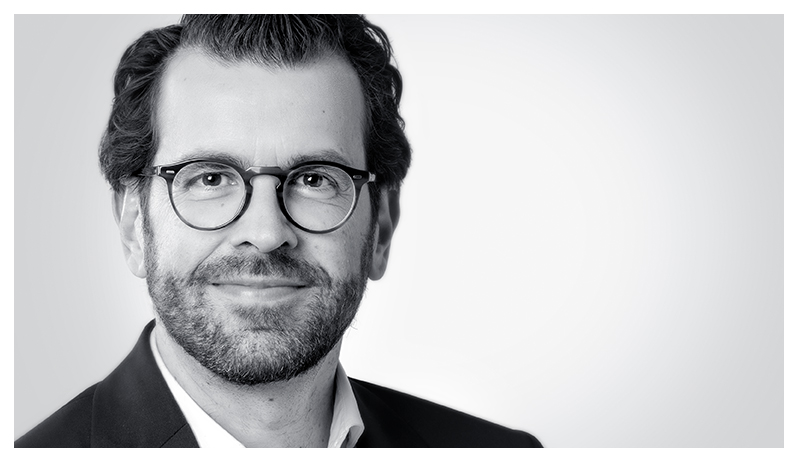
Louis-Bernard Désilets FSA, FCIA, is a partner at Normandin Beaudry with 24 years of experience in pension consulting. He supports clients in designing and monitoring funding and risk management strategies, preparing actuarial valuations and overseeing pension committee management. He has experience with a wide range of pension plans in both the private and public sectors. He leads Normandin Beaudry’s group of experts on annuity purchases. He works closely with insurers and Normandin Beaudry’s consultants and clients to structure annuity purchase transactions that help pension plan sponsors achieve their risk transfer objectives.