
Articles of Interest
Building A Resilient Portfolio: A Forward-Looking Approach to Risk and Allocation

UPP’s Investment Risk team shares best practices and lessons learned in the implementation of the Plan’s integrated risk management framework.
Building a resilient pension portfolio is often framed as a question of asset allocation. In practice, it is more complex, particularly for plans that are growing, onboarding new members, or integrating legacy portfolios with differing risk profiles and liabilities. In these contexts, resilience is not simply about diversification, but about how effectively risk is understood, measured, and allocated at the total fund level.
University Pension Plan (UPP), founded in July 2021, faced the extraordinary challenge of building the critical functions of a pension plan from the ground up while navigating a global pandemic. The Plan brought together multiple legacy portfolios while simultaneously establishing new governance, investment teams, and risk frameworks. This combination of growth and integration created both challenges and opportunities. Inherited exposures were not always aligned with long-term objectives, and evolving liabilities required a more dynamic and holistic approach to portfolio construction.
Against this backdrop, a forward-looking approach to risk and capital allocation was established, grounded in a total fund perspective and informed by liabilities and scenario analysis. A disciplined and thoughtful risk culture continues to serve as a foundation.
Key Pillars of Our Approach
Building a resilient portfolio that delivers dependable pension income for our members is not achieved by avoiding risk. It depends on clearly defining risk, measuring it consistently, and allocating capital based on risk-adjusted returns across a multi-asset portfolio. Pension liabilities and a range of potential scenarios are kept in focus. Several pillars, as implemented in UPP’s portfolio, support this approach.
Total-fund perspective
A total-fund perspective ensures risk is assessed holistically rather than in silos. This includes understanding how different asset classes, strategies, and exposures interact, as well as how diversification benefits and concentration risks evolve across the entire portfolio.
For many plans – particularly those formed through consolidation or ongoing growth – portfolios may combine different asset mixes, liability profiles, and investment approaches. This can result in risk-return characteristics that are not fully aligned with long-term objectives, as it did with UPP.
In this context, reshaping the portfolio over time requires careful evaluation of how each new investment complements existing exposures from a risk-adjusted return perspective.
This is especially relevant in private markets, where legacy exposures can create concentration risks that are not easily adjusted due to illiquidity. Managing these risks requires a forward-looking, total fund perspective where new commitments and strategy selection are used to gradually rebalance exposures and improve overall diversification.
Risk and Liability-aware Portfolio Construction
Portfolio decisions are made with explicit consideration of liabilities, ensuring that asset allocation aligns with long-term liabilities. This involves balancing growth and hedging assets, and allocating risk in a way that supports funded status stability over time.
The objective of pension plans extends beyond generating returns. Portfolio decisions should be aligned with evolving liabilities, which can change over time as plans grow and onboard new members. A liability-aware approach to portfolio construction leverages advanced modeling tools to dynamically assess incoming liabilities and integrate them within a total fund framework. This has enabled UPP to develop a target asset mix that aims for long-term return objectives while managing funded ratio risk.
In practice, risk metrics are embedded throughout the portfolio construction process, with risk insights informing total fund capital allocation. Equity de-risking and addressing duration mismatches – through increased exposure to interest rate–sensitive assets – are key allocation decisions that enhance funding stability and reduce funded ratio risk.
Scenario analysis and stress testing
Scenario analysis and historical stress tests are essential tools to assess how a portfolio may behave in different economic scenarios, including adverse market conditions. These analyses help identify vulnerabilities and inform proactive risk management decisions.
In our view, a comprehensive approach to scenario analysis typically incorporates both top-down and bottom-up perspectives. Our top-down perspective addresses macro-driven questions, such as the impact of changes in interest rates, inflation, or broader regime shifts. Our bottom-up perspective focuses on current portfolio exposures, by sector, geography, and underlying risk factors. On a periodic basis, we leverage our risk systems to develop custom scenarios. Combining these perspectives enables a more robust scenario design and deeper understanding of how risks manifest across the portfolio. This, in turn, has meant building a strong in-house team with advanced risk capabilities to support more tailored and timely analysis.
In addition to these scenarios, we conduct historical stress testing using major market events, such as the 2008 Global Financial Crisis, the COVID-19 pandemic, and the 2022 stagflation episode. Comparisons to more traditional 60/40 portfolios can also help assess whether the intended diversification benefits of a multi-asset approach are being realized in practice.
Managing risk as a shared mindset
Effective risk management depends as much on governance and culture as it does on models and analytics. This is why we seek to foster a culture where risk management is not simply a function, but embedded across the organization. From our leadership through to the investment teams, we have a shared understanding that achieving long-term returns requires taking risks in a thoughtful and intentional manner.
Clear governance, accountability, and a culture where risk is actively considered in all investment decisions foster discipline and informed risk-taking. Unlike traditional frameworks that focus primarily on assets, UPP’s Investment Risk framework integrates asset and liability considerations, ensuring that investment strategies are aligned with future pension liabilities
Key risk governance elements
- Comprehensive risk framework: Identifies and manages the full spectrum of risks including benchmarking, market volatility, demographic changes, and financially material risks (climate, regulation, social factors).
- Integrated risk due diligence: Investment risk due diligence is embedded throughout the investment process, with each new investment assessed at both the total fund and portfolio levels to ensure expected returns are aligned with risk and consistent with portfolio guidelines.
- Ongoing analysis: Regular demographic analysis, asset-liability modeling, and scenario testing are conducted in-house to ensure strategies address evolving portfolio needs and align with UPP’s distinct profile.
- Escalated decision-making: Investment decisions are escalated to senior management, ensuring that considerations such as liquidity, capital commitments, and overall plan health are fully incorporated.
- Holistic decision-making: Approvals are evaluated within various policies and frameworks, reinforcing a comprehensive and integrated approach to risk management.
Our approach is supported by in-house investment risk capabilities and analytical tools, which enable more integrated and timely insights to inform decision-making across the total fund.
Resilience is a deliberate journey
Pension plan resilience is an ongoing process of aligning assets, liabilities, and risk-taking in a changing environment. As market conditions evolve and plan demographics shift, maintaining this alignment requires a forward-looking perspective and an integrated approach to decision-making. Our experience highlights the benefits of viewing risk through a total fund lens, particularly in the context of continuous growth and portfolio integration. Together, these pillars support a resilient portfolio capable of navigating evolving market environments while delivering pensions to our members.
Ultimately, building a resilient portfolio is less about eliminating uncertainty and more about ensuring that risk is taken deliberately, is understood, and aligned with our purpose of delivering stable and secure pensions. As portfolios grow more complex, the ability to generate integrated, in-house risk insights is becoming an increasingly important differentiator for pension plans today and for the future.
University Pension Plan Ontario (UPP) is a jointly sponsored defined benefit pension open to all Ontario university sector employers and employees. UPP manages $12.8 billion in pension assets and proudly serves over 44,000 members across six universities and 18 sector organizations. The plan invests to deliver secure, stable pension benefits for members today and for generations to come. For more information, please visit myupp.ca and follow UPP on LinkedIn.
Nelson Chau, Managing Director of Total Portfolio Management, UPP
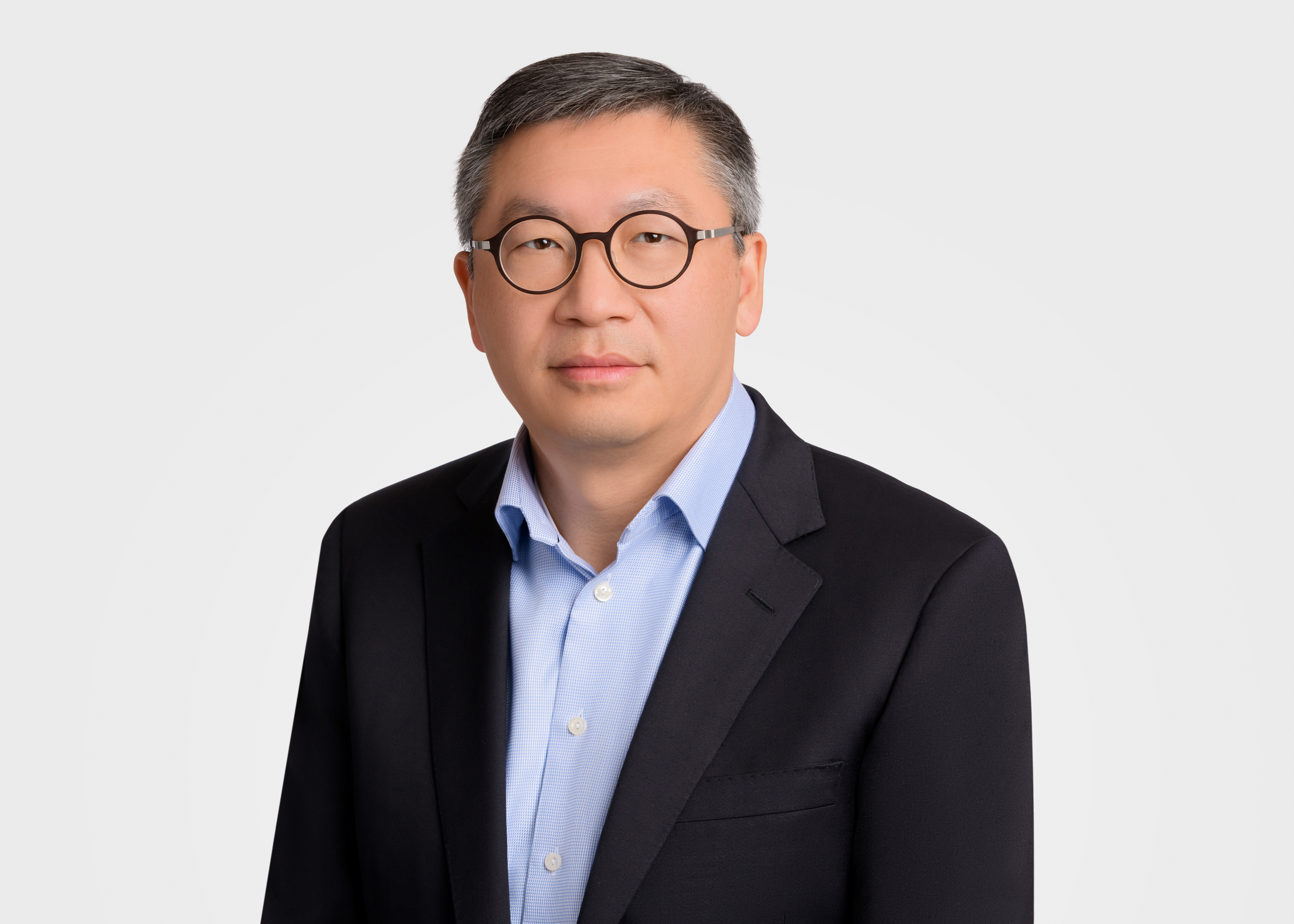
Nelson Chau is Managing Director of Total Portfolio Management at UPP. He leads UPP’s Total Portfolio management efforts, overseeing investment strategy and execution, integrating portfolio construction, capital allocation, and risk management to drive sustainable long-term performance.
Joyce Chen, Senior Director of Investment Risk, UPP

Joyce Chen is Senior Director of Investment Risk, at UPP. She leads the development and continuous enhancement of investment risk management, embedding a forward-looking risk lens into portfolio construction and capital allocation across asset classes while partnering with investment teams to improve transparency, diversification, and portfolio resilience.