
Articles of Interest
Why long-term pension success hinges on stronger governance standards

This article originally appeared on Benefits and Pensions Monitor. Read the story here.
Governance and risk management should be seen as evolving efforts, rather than compliance checkboxes, says APN Advisory’s CEO
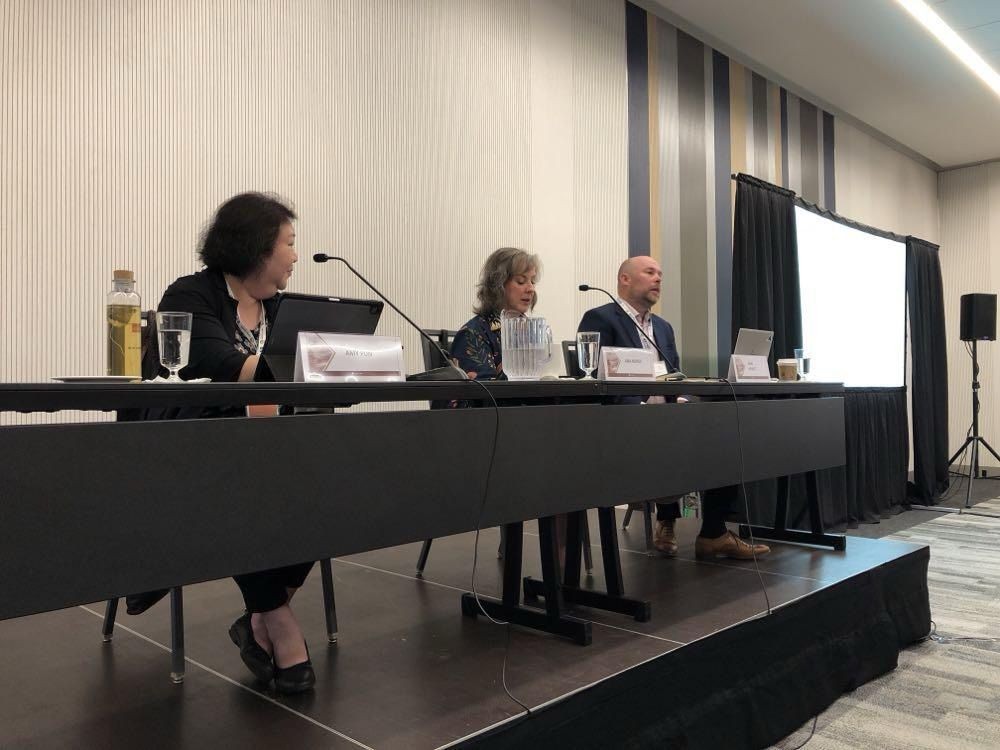
Robust governance should be the backbone of Canada’s pension systems that ultimately helps protect members’ benefits.
This is the core belief that both Ana Nunes and Sean Hewitt share as pension boards and trustees navigate evolving risks, shifting regulations, and long-term strategic goals.
Hewitt, president and CEO at Vestcor Inc., underscored that there isn’t a single formula for pension governance. Instead, he sees it as an ongoing process that requires flexibility and continual improvement.
“Having a skills matrix and identifying needs of your board or your trustee group can help aid in that discussion. However, it's a journey, and there's lots of tools available to trustees to ensure that they're covering all the bases,” said Hewitt.
One potential solution to mitigate that complexity, Hewitt suggests, is tapping into expert advice and building trusted partnerships.
Nunes also reiterated that governance and risk management should be seen as evolving efforts, rather than compliance checkboxes for pension boards and plan sponsors.
“Governance and risk management is a journey. Don't try and do it all at once because you'll get frustrated and likely fail. Evolve from where you are and continuously just add more approaches that are helping you as a board. Don't do it as a compliance exercise. Do it because it's helpful and learn from others,” said Nunes, CEO and founder of APN Advisory Canada.
Nunes believes that by sharing what works in an organization can help boards avoid missteps and adopt proven strategies more effectively.
Hewitt underscored that strong governance is fundamental and “can’t be overstated” to protecting members' retirement benefits. He emphasized that it must be rooted in best practices and designed to support informed, responsible decision-making, adding that for fiduciaries, enabling sound judgment is a core obligation.
While Nunes agreed, she pointed out the structural difficulty trustees face: they’re accountable for the full oversight of the plan without being involved in daily operations. Still, she sees it as a critical but inherently challenging role.
When asked what the key challenges pensions face as it relates to governance today, Nunes acknowledged the growing complexity of the external environment as a major challenge for pension governance. She highlighted a mix of global and operational risks, ranging from market volatility and geopolitical uncertainty to economic pressures and even cyber threats as “a big challenge for pension plan oversight”.
That’s why she stressed the need for safeguards to protect member and investment data, as well as the ability to respond swiftly if a breach occurs.
Hewitt also underscored there remains a persistent skills gap in the area of information technology. With AI advancing quickly and cybersecurity threats becoming more sophisticated, Hewitt said boards must actively seek out expertise in these domains, noting that Vestcor has since made deliberate efforts to bring that knowledge into the boardroom.
Nunes emphasized the practical value of using simple, visual tools to support board oversight. One method she’s particularly passionate about is the use of risk dashboards, adding these dashboards can also be effective for strategic planning and aligning the board on priorities.
“A one-page summary of the status of the major risks of the plan allows the trustees to be able to look forward and get the plan to a different position in the future,” she explained.
She also pointed to a more fundamental gap: a lack of understanding of governance processes themselves. Areas like meeting management and board composition often go overlooked, especially by boards that haven’t adopted formal governance training.
But she believes that’s beginning to shift, noting that better training leads to smoother operations and clearer role definition between board members and management.
Hewitt suggests that a well-structured skills matrix is becoming increasingly essential for pension boards to identify the capabilities they need, particularly as the complexity of oversight grows, noting that it provides a clearer framework for recruitment and board development.
Beyond skill mapping, Hewitt highlighted the importance of internal reflection, particularly around the performance and risk posture of third-party service providers.
“The process of self-reflection on evaluating one's service providers is really important, including the risk management aspects,” he said. “I think this level of sophistication in assessing third parties and the risk management posture in using those third parties has improved. That level of maturity has improved. But I would expect to continue to see that over the next five years as well.”
Reflecting on the next decade’s risks, Hewitt and Nunes both agreed that certain risks, particularly cybersecurity and artificial intelligence, are no longer “emerging” but have become entrenched features of the pension risk landscape.
Geopolitical instability also remains a constant pressure for plan management. Both leaders pointed to environmental and ESG-related risks as ongoing concerns, even if they’re less prominent in public discourse than in past years.
Notably, Nunes noted that climate risk is especially difficult for boards to address because of its long-term nature and the lack of a one size solution approach. Pension plans are still refining how proactive or reactive they should be, recognizing that today's decisions could carry significant long-term consequences.
As pensions also address and adapt to risk management frameworks, notably CAPSA guidelines, both Nunes and Hewitt explained that implementing the new guidelines helped their respective organizations become more precise in setting and articulating key objectives, particularly around funding.
By clearly defining targets, like acceptable funding ratios and distribution rates, Nunes’ board created measurable benchmarks to guide oversight. This shift toward specificity led to the use of more quantitative risk assessments aligned with the plan’s strategic goals, something she described as both new and highly effective.
Nunes emphasized the importance of a gradual, practical approach to adopting the guidelines. Rather than trying to overhaul everything at once, Nunes advised boards to start with an honest evaluation of their current practices, then focus on one or two areas for improvement at a time.
As for addressing member outcomes, both acknowledged that understanding and responding to member expectations remains a persistent challenge for pension boards. Nunes noted the difficulty in gauging how much members even think about their pension plans, pointing out the limited effectiveness of tools like surveys and focus groups.
Hewitt agreed, adding that member views often vary widely, particularly around ESG issues, making it hard to find consensus. He believes boards should instead ground their decisions in what best supports long-term sustainability.
Even board culture is equally important, Nunes added, highlighting the need for an environment that welcomes diverse perspectives and constructive dissent, while still being able to make an ultimate decision.
“The dynamics and team building among board members can be just as important as the technical material they have to work through,” she said.
Josh Welsh, Journalist, Benefits and Pensions Monitor

Josh Welsh is a journalist in the Wealth vertical for Key Media. He's the lead reporter for BPM and has written for BPM's sister US publication InvestmentNews. Josh is a Humber College alumnus, with a bachelor’s in journalism and a diploma in screen acting.
When he’s not writing or interviewing, he’s likely spending time at the historic Arts and Letters Club of Toronto, watching the newest movie on the biggest screen possible or pursuing his dream of being an actor. For story suggestions or to get in touch, he can be reached at [email protected].