
Articles of Interest
CAP Retirees: Between a Rock and a Hard Place

Defined contribution plans have, in many ways, solved the accumulation problem.
Members benefit from institutional governance, diversified portfolios, low fees and structured decision-making. Outcomes are monitored. Risks are managed. Sponsors can demonstrate oversight.
And then, at retirement, that structure largely disappears.
Members move from a governed environment into one where decisions become individual, support becomes inconsistent, and outcomes become uncertain, at precisely the point where financial risk is greatest.
The system shifts from institutional governance to individual responsibility at the point where outcomes become most complex.
This is not a failure of design or a lack of products. It is a gap in governance.
A problem hiding in plain sight
It is important to acknowledge that many defined contribution outcomes are constrained by contribution levels. In many cases, inadequate savings – rather than investment or decumulation design – is the primary driver of poor retirement outcomes.
Nothing in what follows addresses that structural issue directly.
On paper, the Canadian system offers choice. Members can move into RRIFs, purchase annuities, or in some cases remain in group-based arrangements. From a design perspective, the system appears complete.
In practice, most members transition out of the plan at retirement and into the retail market.
What they encounter depends heavily on their circumstances. Those who can afford advice may receive it. Those who cannot are left to navigate a complex and unfamiliar set of decisions on their own. Fees often increase as members move from institutional pricing to retail structures. The range of options expands, but governance does not follow.
The result is a system that is well-governed up to retirement, and largely ungoverned thereafter.
It is tempting to frame this as a product gap or a regulatory shortcoming. Neither explanation fully holds.
The building blocks already exist. RRIF structures are well established. Group-based decumulation is permitted. Sponsors can retain members within plan environments if they choose to do so.
What is missing is not capability. It is a way of governing outcomes once members begin drawing an income.
When governance stops, risk doesn’t
In accumulation, governance answers a relatively stable question: are members on track to achieve an appropriate retirement outcome?
In decumulation, the question becomes more complex and more important: Is the income being drawn sustainable, and how would we know if it is not?
In most cases today, there is no clear answer.
Retirement income does not fail because of a single decision. It fails through the interaction of risks over time:
- sequence of returns
- withdrawal behaviour
- longevity
These risks are well understood in isolation. What is less understood is how they combine for real members over time.
Two members may retire with similar balances and follow the same pathway, yet experience very different outcomes. One remains on a sustainable path. The other does not.
Without a framework to observe this, the divergence is invisible and therefore cannot be governed.
What is striking is that this transition is often accepted as inevitable. It is not.
Sponsors who define, monitor and adjust outcomes during accumulation step back when members begin drawing an income.
The capability to govern exists. The question is why it is not applied.
The practical constraint and the opportunity
This does not imply that plan sponsors should deliver fully individualized strategies for every member. That would be costly, complex, and would blur the boundary with financial advice.
But there is a wide space between full personalization and no oversight at all.
The practical question is not whether sponsors can solve decumulation perfectly, but whether they can do better than the current absence of governance.
There are steps that can be taken within existing structures.
First, retaining members within the plan environment wherever possible. In-plan drawdown arrangements provide a foundation for governance. Without this, visibility is lost at retirement.
Second, introducing a framework for monitoring outcomes over time.
This does not require individualized advice. It requires the ability to assess, on a structured basis, how outcomes are evolving and whether they remain aligned with plan objectives.
In practice, this could take the form of periodic governance processes – for example, quarterly reviews supported by standardized reporting on income sustainability.
This can be framed using forward-looking measures:
- likelihood of maintaining income
- deterioration relative to expectations
At a plan level, this provides visibility of how risks are distributed.
At a member level, it highlights where outcomes are beginning to diverge.
Importantly, this approach does not remove choice. Members retain decision-making authority. Governance ensures that outcomes are visible, understood, and considered.
Moving beyond a single point in time
Much of the current approach to decumulation is anchored in point-in-time decisions:
- an income is set
- a portfolio is selected
- a projection is produced
- But decumulation is not static.
Outcomes evolve in response to markets, behaviour and time. A pathway that appears appropriate at retirement may not remain so.
A governance framework must accommodate this evolution.
Without ongoing observation, governance remains tied to initial decisions rather than the outcomes they produce.
Introducing continuous monitoring shifts the focus, from whether a pathway was appropriate at the outset, to whether it remains appropriate over time.
Responding when outcomes diverge
Monitoring raises a practical question: what happens when outcomes begin to diverge?
The response does not need to be complex.
In many cases, it may involve clearer communication highlighting the implications of current drawdown levels or market conditions. In others, it may involve refining guidance or revisiting assumptions.
The objective is not to eliminate variation. Some dispersion is inevitable.
The objective is to ensure that it is visible, understood, and considered.
Clarifying roles and responsibilities
Extending governance into decumulation clarifies roles.
Sponsors and governance bodies:
- define the framework
- set metrics
- oversee outcomes
Service providers:
- support modelling and reporting
Members:
- retain decision-making authority
This preserves the boundary with financial advice, while ensuring outcomes are not left unmanaged.
A direction of travel
There are increasing signs that expectations are shifting.
Internationally, regulatory and industry developments are placing greater emphasis not only on the design of retirement pathways, but on how outcomes are monitored and evidenced over time.
Canada is unlikely to be an exception.
The question is not whether the system works for some members. It is whether it works consistently and whether that can be demonstrated.
Conclusion
CAP plans have successfully institutionalized governance in accumulation.
At retirement, that governance largely falls away.
The consequence is not a lack of choice, but a transfer of risk, from a system designed to manage it, to individuals expected to bear it.
If income sustainability is not being measured, monitored, and revisited over time, then it is not being governed – regardless of how well the pathway was designed.
Decumulation has become the point at which governance stops, rather than where it is most needed.
The question for plan sponsors is no longer whether they can support retirement income. It is whether they are comfortable with the extent to which they currently do not.
Johan Kriek
Founder, Quantum Leap
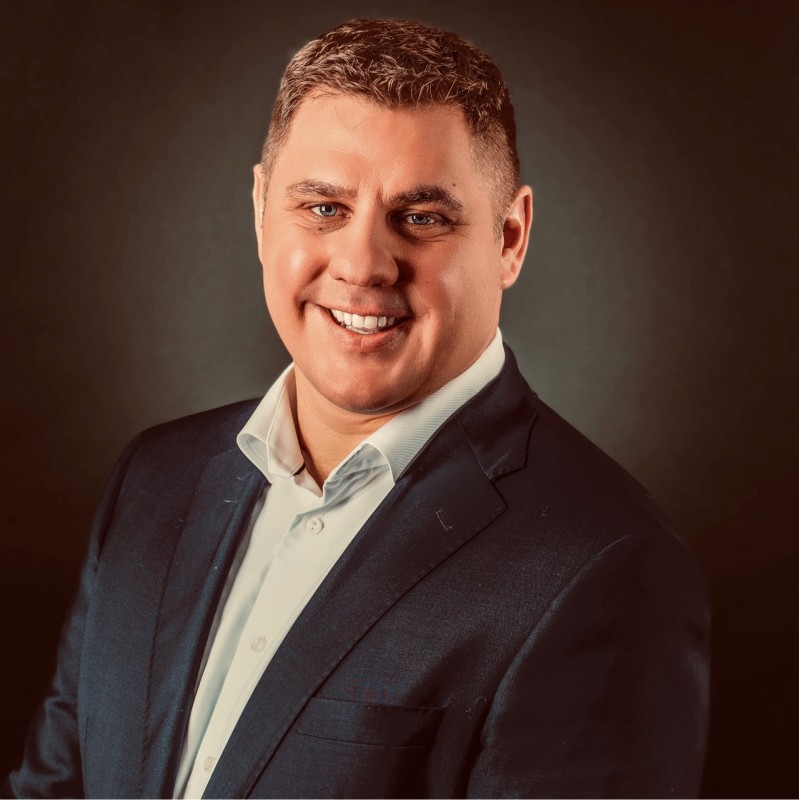
Johan Kriek works in the field of retirement income sustainability and defined contribution (DC) decumulation governance. His work focuses on how plan sponsors, trustees and governance bodies can better evidence the long-term sustainability of member retirement outcomes, particularly for members who do not actively engage with retirement decisions.
He has spent several years researching the interaction between longevity risk, investment risk and withdrawal behaviour, and how these factors influence retirement income durability at the individual member level. His interests include decumulation pathway design, governance frameworks, outcome monitoring and the evolving expectations placed on retirement plan overseers as DC systems mature globally.
Johan writes and speaks on retirement income sustainability, governance of decumulation pathways, and the practical challenges of ensuring appropriate outcomes for heterogeneous member populations. His work aims to support informed, evidence-based discussion within the retirement industry.