
Articles of Interest
Building Resilience: Canadian Asset Owners’ Focus on Advanced Risk Frameworks

Canadian asset owners consistently demonstrate a strong and deliberate focus on risk management, reflecting heightened sensitivity to market volatility and operational complexity.
This was evidenced by the results of Northern Trust’s 2025 Asset Owners in Focus study – a survey of 180 asset owners globally – which showed that Canadian respondents continue to prioritize risk management and risk budgeting as core metrics for assessing portfolio performance. Liquidity risk, counterparty risk, and issuer risk feature prominently in how portfolios are monitored and governed.
These asset owners also place significant emphasis on structured risk techniques such as exposure management, risk analysis, and measurement against reference portfolios to ensure alignment with long‑term objectives. This focus is reinforced by the challenges they identify ahead, particularly the increasing complexity of risk management and the need for timely, accurate data to support decision‑making.
As a result, Canadian institutions are actively investing in more robust risk frameworks and tools, underscoring a disciplined, forward‑looking approach to managing uncertainty while maintaining portfolio resilience.
As Canadian asset owners navigate this increasingly complex landscape, the imperative is clear: resilience must be embedded not just in models, but in every facet of portfolio oversight. The following sections explore how advanced risk frameworks are being put into practice—shaping investment decisions, operational processes, and the very definition of what it means to manage risk effectively.
Leading in well-rounded risk techniques
Canadian respondents show a pronounced reliance on risk analysis as their primary technique for managing portfolio risk, with 43% ranking it as their most important approach and well ahead of any other method. This suggests that, rather than anchoring risk management in a single structural framework such as asset and liability management (ALM) or risk budgeting, Canadian asset owners are emphasizing a more continuous, diagnostic approach to understanding and managing risk.
Beyond risk analysis, responses become far more fragmented, with factor-based investing and ALM each cited by 14%, and Smart Beta and tactical swings to asset allocation each cited by 10%.
This dispersion points to a high degree of institutional customization in how risk frameworks are implemented, even where there is alignment on the importance of analytical oversight.
In other geographies, top rankings are more evenly split across exposure management, tactical allocation shifts, or ALM‑driven approaches.
We also see a wide variety of risk management metrics named as top-three most important measurements:
- Liquidity risk – Named as a top-three metric by 48% of respondents
- Operational risk - Named as a top-three metric by 48% of respondents
- Risk budgeting – Named as a top-three metric by 38% of respondents
- Reputational risk - Named as a top-three metric by 38% of respondents
- Regulatory risk - Named as a top-three metric by 29% of respondents
Reacting to a greater liquidity emphasis
According to the study, Canadian respondents consistently adjust their risk framework and look for downstream effects on how they should be pivoting approaches such as liquidity strategy. For Canadian respondents who indicated that liquidity was increasing in importance, half of those credited that view to a change in risk strategy – indicating that they actively apply risk measures when determining liquidity levels in their portfolios.
In reacting to this increased importance of liquidity, 75% said they turned to investing in lower risk short-term cash vehicles, 63% increased cash allocations, and 50% said they expanded their counterparty risk monitoring.
Increasing operational investment across tech, teams, and service providers
According to the report’s insights, the Canadian asset owner community is more likely to invest in expertise, both internally and externally, as well as technology when it comes to their risk management approach.
In terms of dedicated professionals employed within their organizations, 48% of Canada respondents employed more than 10 dedicated risk strategy specialists compared to only 30% of the global audience, showing an intention around maintaining larger, more capable risk teams.
In looking at what services asset owners already entrust to service providers, 62% of respondents indicated they received risk measurement services, indicating an elevated willingness to invest in expert services for this need compared to the global community (51%).
This group also has high expectations when it comes to how service providers can help them better manage their data and technology on the risk management front. Forty-three percent flagged enhanced risk management and analytics as a valuable service, versus just 36% of global respondents.
Risk resilience in Canada
Ultimately these Canada‑focused findings point to a consistent theme: risk is treated as an essential operating discipline. Canadian asset owners are explicit about where risk sits in the portfolio, how it is monitored, and who is accountable when conditions change.
For Canadian institutions, advanced risk frameworks are ultimately about control and continuity. They provide a common language for decision‑making across investment, operations, and governance, ensuring portfolios remain investable, obligations can be met, and long‑term objectives stay intact even as market conditions shift. In an environment defined by complexity and uncertainty, that discipline is what turns risk management into a durable source of resilience.
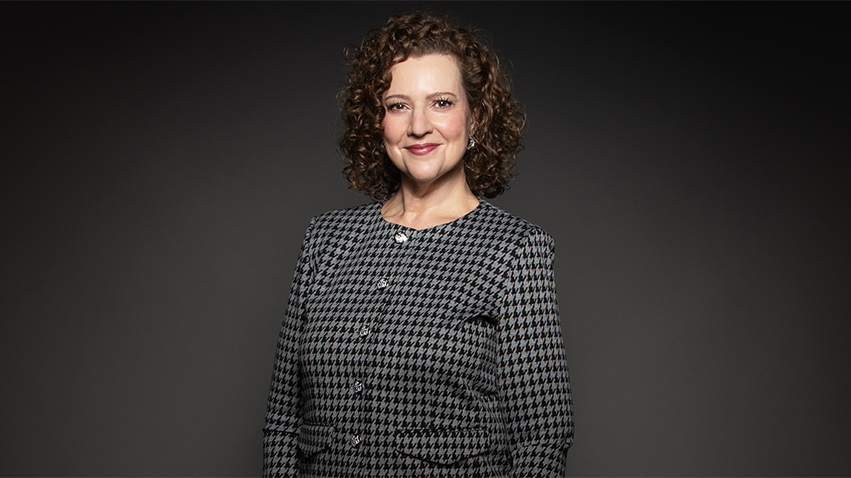
Katie Pries
Country Executive, Canada, Northern Trust
_1.jpg)
Katie Pries is Country Executive, Canada and Head of Financial Crimes Strategy, Project Oversight & Delivery at Northern Trust. She oversees the management and growth of Northern Trust’s business in Canada, strengthening relationships with clients, prospects, and regulators. She serves on the Canadian Management Committee and is a member of the Canadian Board. Katie also served as Global Chief Risk Officer for Corporate and Institutional Services business unit, inclusive of The Northern Trust Canada Legal Entity as well as Northern Trust Global Services. In this role, Katie also served as a Director on The Northern Trust Company International Banking Company (TNTIBC) Board. Prior to joining Risk Management, Katie served as the Managing Executive of Client Service for the asset management business of Northern Trust. In this capacity, Katie was responsible for leading overall client service delivery, including service model and execution of client activities for the Institutional, Wealth, and third-party business channels. Before that, Katie served as a lead relationship advisor and advocate for large corporate client entities. Specifically, her responsibilities included: Fostering client/Northern relationship and fielding potential cross-sell opportunities; documenting and complying with client-specific procedures; managing specific client issues and ensuring resolution to the client’s satisfaction.