
Articles of Interest
‘That’s the silent loss’: how Canada is failing to attract global pension investment

This article originally appeared on Benefits and Pensions Monitor. Read the story here.
Ottawa risks undermining pension system by forcing domestic allocations, says ICPM’s Sebastien Betermier
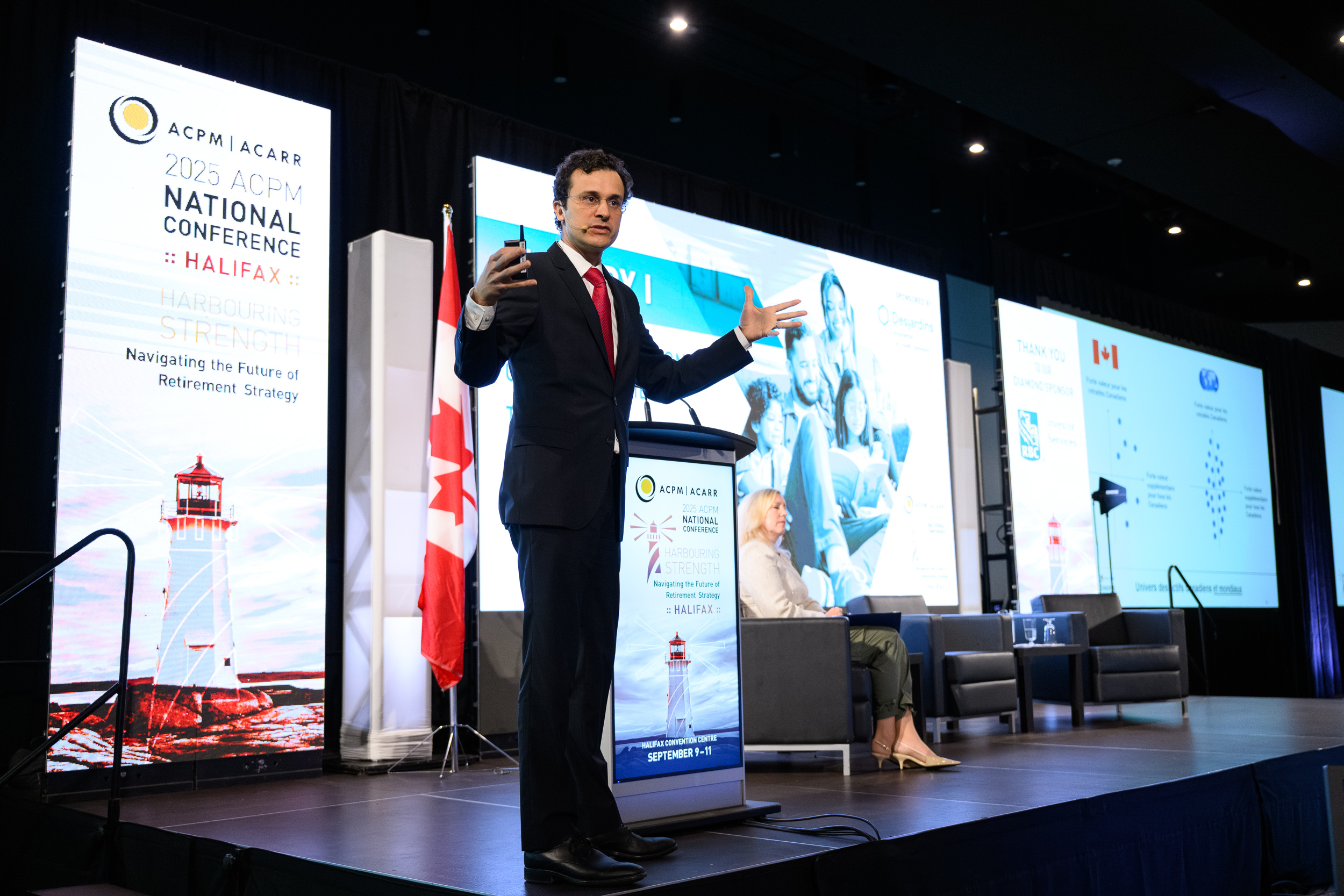
Amid calls for Canada’s pension giants to keep more of their capital at home, some industry leaders are wary about the perceived message that it brings.
“You can go down one path, which is the path I disagree with. That's the path of mandating or telling the funds what to do and starting to blend other priorities with the retirement security policy goal. Or, the other path, which in my view, makes a lot of sense, is to create conditions that naturally encourage pension fund investment to come in,” said Sebastien Betermier.
Betermier, finance professor at McGill University’s Desautels Faculty of Management and executive director of the International Centre for Pension Management doesn’t reject the idea of domestic pension investment outright. However, he warns against undermining the core principles that have made Canada’s pension system one of the most effective in the world.
While the large pool of capital held by pension funds may appear tempting to governments looking to fund domestic initiatives, he cautions against short-sighted thinking.
He believes there’s room for “really good alignments between pension funds and governments” but only if it preserves the integrity of the pension system. Forcing funds to invest in politically driven projects, he argues, risks destabilizing a system that works precisely because it operates independently.
He visualizes the challenge as two overlapping bubbles: one representing government goals for economic growth, the other representing the fiduciary duties of pension funds.
“Wherever they do overlap, you have, by definition, really good investments for domestic growth that also meet the fiduciary responsibilities of the funds,” he said.
To operationalize this overlap, Betermier and a working group at the International Centre for Pension Management developed what they call the “investable window.” This framework defines the specific conditions under which pension funds can invest in domestic projects while staying true to their legal and financial obligations. These include competitive, risk-adjusted returns, sufficient liquidity, project scale, strong governance, and low development risk.
“If you want to align government priorities with domestic growth, you have to think about finding the conditions that make sense for the funds to invest in,” he explained. That might involve governments de-risking certain project elements, ensure regulatory clarity, or streamlining approval processes to make infrastructure assets viable for institutional capital.
Betermier argues that attracting pension capital doesn't always require direct government spending, it often comes down to creating a stable, long-term business environment that welcomes investment. If Canada gets that part right, he says, it won't just be domestic pension funds deploying capital, but global investors as well.
Because international capital isn't visible in the same way, the economic loss from failing to attract it often goes unnoticed. “That is an order of magnitude higher, that’s the silent loss that we never talk about,” he noted.
By contrast, forcing Canadian funds to invest at home through mandates may yield marginal gains, but at the risk of damaging a system that relies on autonomy and performance. According to Betermier, the smarter move is to build a framework that draws capital in, not one that compels it.
“Other countries have done it, I don’t see why we can’t,” he added.
Still, Betermier argues that there are practical and strategic reasons for Canadian pension funds to invest domestically, particularly when it comes to private market assets. Notably, local investments offer a distinct information advantage.
“You have local talent, you understand the mechanics of what’s going on locally and in the governments. As an investor, it actually gives you an edge,” he said.
Beyond the informational edge, he points to several risk management benefits. Domestic assets help pension funds hedge against inflation, interest rate volatility, and currency exposure are all key concerns when managing long-term liabilities. For instance, even local real estate might be actually indexed to the very same CPI, the inflation that you actually owe to your pensioners,” he explained.
Despite narratives suggesting otherwise, Betermier believes Canada’s pension funds already show a natural home bias, especially in areas like bonds, real estate, and infrastructure. He noted that approximately 70 per cent to 80 per cent of Canadian bond holdings while 60 per cent of real estate assets are invested within the country, well above what global benchmarks would suggest.
“I see that the funds invest more in Canada than the size of the Canadian economy in the world suggests,” he said.
Yet, he draws a clear distinction between the firms that produce goods and services and the institutions that finance them. While companies like Rogers and Bell drive direct economic activity, capital providers like banks, insurers, and pension funds operate at a level above, fueling those firms with the capital they need to grow. Pension funds, he argues, should be assessed in comparison to these other financial intermediaries and not to the firms themselves.
What sets pension funds apart is their scale, stability, and long-term orientation. Unlike fragmented RRSP investments or retail asset managers focused on short-term benchmarks, pension funds consolidate savings and operate with far longer time horizons.
Their ability to tolerate more risk than banks or insurance companies, which are often constrained by regulation and concentrated in fixed income, gives pension funds a unique edge as Betermier explained, they can generate anywhere from six to nine per cent per year on average, outperforming many other institutional investors.
Despite their size - $2 trillion among the Maple 8 alone - Betermier argues Canada’s investment environment doesn’t fully capitalize on this resource as foreign capital is notably absent from Canadian infrastructure.
Contrastingly, Canadian funds are highly active abroad.
“Canadians actually own tunnels in Sydney, they own farms, they own the grid, the whole electricity grid,” Betermier noted, as do Dutch and Norwegian investors, who flock to Australia’s market because it welcomes institutional capital.
Betermier underscored the lack of foreign investor presence in Canada is telling.
“The mere fact that we don’t hear about the other countries [investing in Canada] tells me something’s wrong, that we haven’t been successful at raising institutional capital to finance projects here in Canada.”
Josh Welsh, Journalist, Benefits and Pensions Monitor

Josh Welsh is a journalist in the Wealth vertical for Key Media. He's the lead reporter for BPM and has written for BPM's sister US publication InvestmentNews. Josh is a Humber College alumnus, with a bachelor’s in journalism and a diploma in screen acting.
When he’s not writing or interviewing, he’s likely spending time at the historic Arts and Letters Club of Toronto, watching the newest movie on the biggest screen possible or pursuing his dream of being an actor. For story suggestions or to get in touch, he can be reached at [email protected].